
Open Letter: CISAF

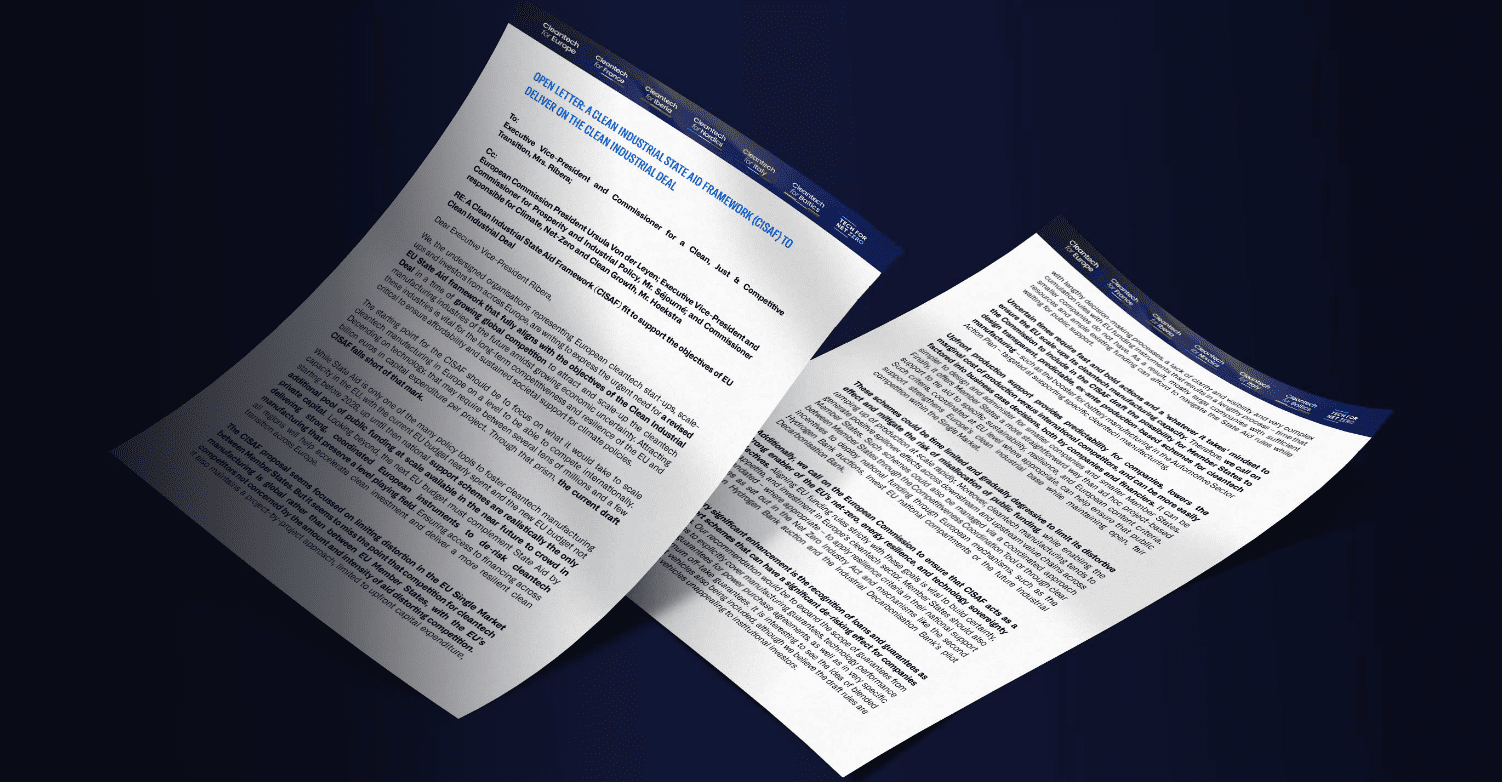
Open Letter: A Clean Industrial State Aid Framework (CISAF) to Deliver on the Clean Industrial Deal

๐Ÿ‡ช๐Ÿ‡บ โœ Cleantech for Nordics joined Cleantech for Europe, together with Cleantech for Iberia, Cleantech for France, Cleantech for Italy, Tech for Net Zero and Cleantech for Baltics, in signing a joint letter to the European Commission on the Revised State Aid rules implementing the political ambitions of the Clean Industrial Deal.

With the next EU budget not kicking in before 2028, State Aid is currently the most important public tool to de-risk the scale of cleantech manufacturing in Europe. The current draft of the Cleantech & Industrial Scheme for Aid Framework (CISAF) includes welcome steps forwardโ€”but also leaves key gaps that risk slowing down Europeโ€™s industrial momentum.

Hereโ€™s what is needed:

๐Ÿ”น Allow Member States to design transparent, predictable, ex-ante production-based schemes for cleantech manufacturing.

๐Ÿ”น Higher aid volumes and intensitiesโ€”current levels are far below whatโ€™s needed to de-risk cleantech manufacturing and industrial decarbonization, and are a far cry from what international competitors are providing.

๐Ÿ”นSimplified and faster approval processes. Lengthy, lump-sum, project-by-project aid approvals remain a major barrier for scale-ups and are not bankable for SMEs, entrepreneurs and financiers โ€” not predictable, transparent, or fast enough. This is where simplification could make a huge difference for SMEs!

๐Ÿ”น Ensure CISAF effectively supports EUโ€™s net-zero, energy resilience, and technology sovereignty objectives

๐Ÿ”น Expand the scope of guarantees to explicitly cover manufacturing guarantees, technology performance guarantees and guarantees for power purchase agreements, as well as in very specific cases some minimum of-take guarantees

๐Ÿ“ฃ We need to make it easier for cleantech companies to succeed, and we need policy frameworks that unlock scale, speed, investment and bankability. Itโ€™s time for Europe to go beyond risk avoidanceโ€”and start truly backing its industrial future. ๐Ÿš€

Open Letter: CISAF2026-01-02T21:42:47+01:00

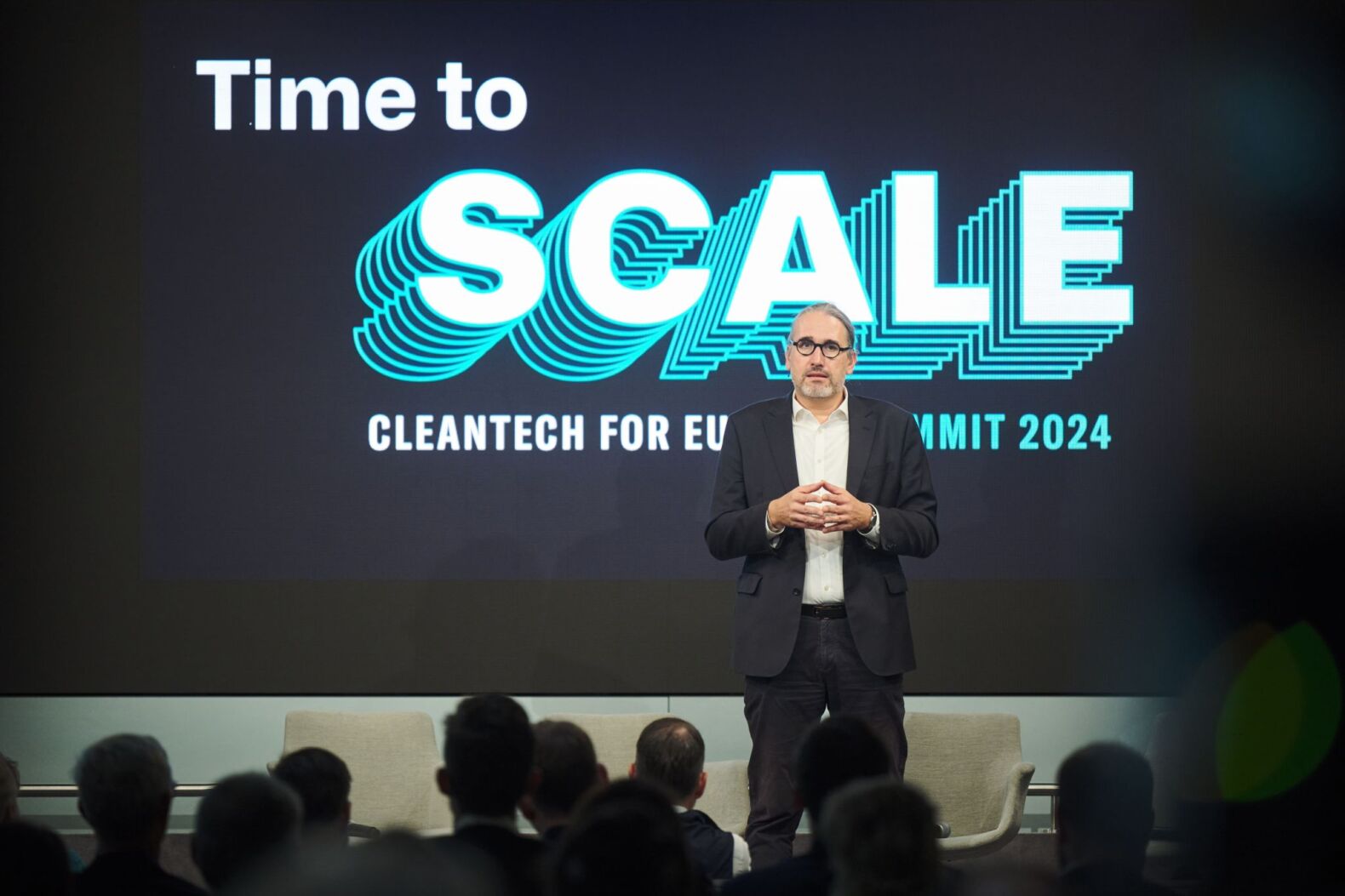
Cleantech for Europe Summit

Originally published: September 2024

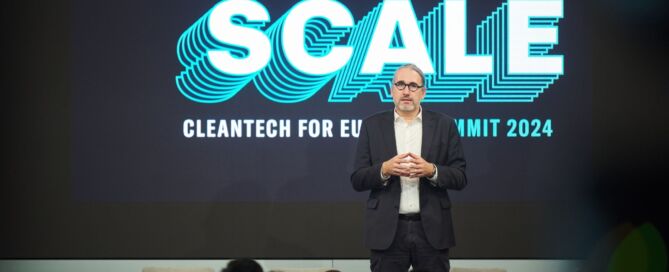
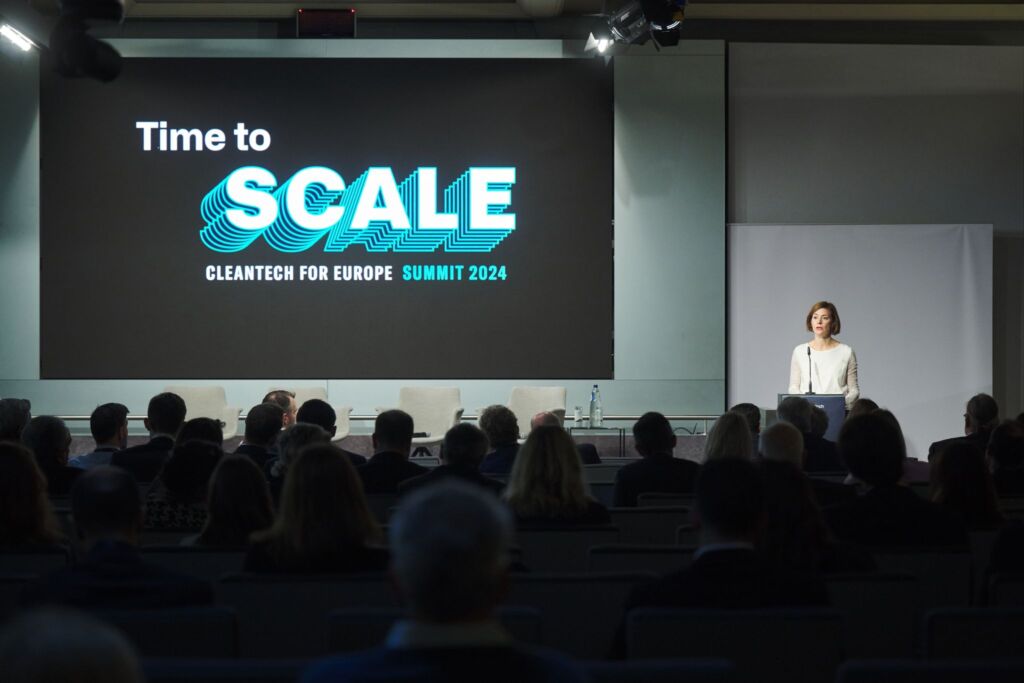
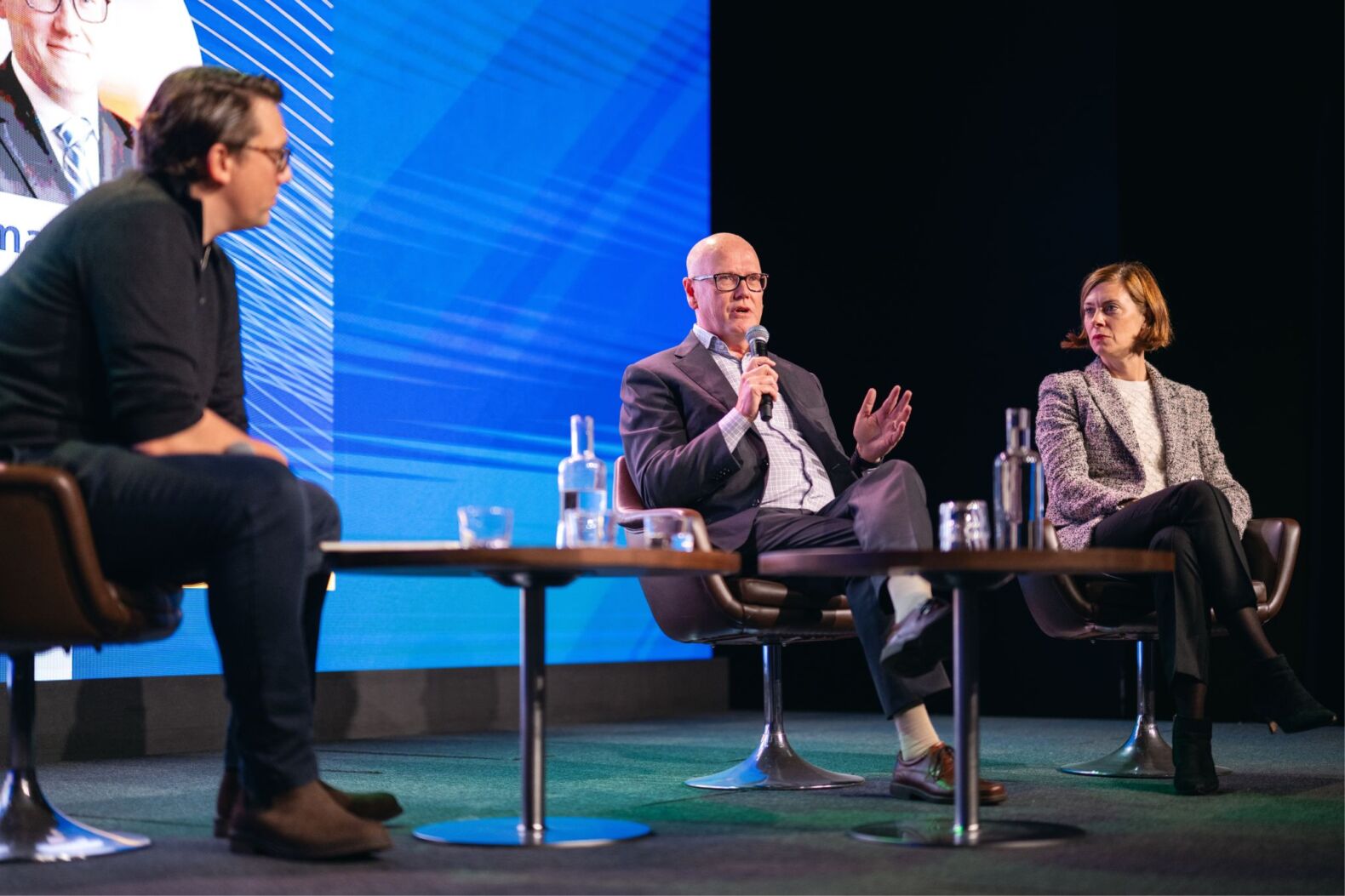
Our colleagues at Cleantech for Europe organized the annual hashtagCleantechforEuropeSummit in Brussels last week. hashtagPolicymakers, hashtaginnovators, and hashtaginvestors all gathered together under the same roof.๐Ÿ›๏ธ And the message was clear: ๐—ถ๐˜โ€™๐˜€ ๐˜๐—ถ๐—บ๐—ฒ ๐˜๐—ผ ๐˜€๐—ฐ๐—ฎ๐—น๐—ฒ! ๐Ÿ—๏ธ๐Ÿ‘ฉโ€๐Ÿญ

Itโ€™s hard to summarize a full day of excellent panels, discussions, announcements and meetings, but here are some of our favorite takeaways from the day.

๐Ÿ’ฐ From the get go, Julia Reinaud emphasized two key messages. (1) We need to address the core issue of hashtagmarketdemand. We need to create conditions and environments where it is easy for innovators and industries to bet on hashtagcleantech. (2) ๐——๐—ฒ-๐—ฟ๐—ถ๐˜€๐—ธ๐—ถ๐—ป๐—ด ๐—ถ๐—ป๐˜ƒ๐—ฒ๐˜€๐˜๐—บ๐—ฒ๐—ป๐˜๐˜€. We canโ€™t say it enough, but we need to introduce financing mechanisms, like public guarantees, which can help hashtagderisk investments and attract private capital.

๐Ÿฆ This leads us to an excellent point made by Anna Skarborg, of P Capital Partners ๐Ÿ‘‰๐Ÿป We need to think about additionality. How do we ensure that the capital we inject brings in ๐—ฎ๐—ฑ๐—ฑ๐—ถ๐˜๐—ถ๐—ผ๐—ป๐—ฎ๐—น ๐—ณ๐˜‚๐—ป๐—ฑ๐—ถ๐—ป๐—ด? We need to use public funding to leverage private capital โ€” not use public money where private capital is already going.

๐Ÿ‡ช๐Ÿ‡บ Martin Hojsik, Vice President of the European Parliament, put it bluntly: “๐—ช๐—ฒ ๐˜๐—ฎ๐—น๐—ธ ๐—ฎ ๐—น๐—ผ๐˜. ๐—•๐˜‚๐˜ ๐—ป๐—ผ๐˜„ ๐—ถ๐˜โ€™๐˜€ ๐˜๐—ถ๐—บ๐—ฒ ๐˜๐—ผ ๐—ฎ๐—ฐ๐˜.” To give cleantech companies a real chance to compete, we must clear roadblocks and inject capital at scale. Some ventures will fail, others will thriveโ€”but in the end, Europe will make a profit and can seize leadership in scaling and deploying clean technologies.

๐Ÿ’ผ Policy, policy, policy. Its importance cannot be overstated, a point echoed by many speakers throughout the day. Kurt Vandenberghe made it clear: the Green New Deal is here to stay, no question about it. However, thereโ€™s still a critical need for de-risking measures and ๐—ฐ๐—น๐—ฒ๐—ฎ๐—ฟ ๐—ฝ๐—ผ๐—น๐—ถ๐—ฐ๐˜† ๐—ถ๐—ป๐—ฐ๐—ฒ๐—ป๐˜๐—ถ๐˜ƒ๐—ฒ๐˜€ to provide investors with the certainty they need.

๐Ÿ† We were excited to see some Nordic companies join the Cleantech for Europe scale-up coalition! Congratulations to Stegra, Baseload Capital and Heart Aerospace!

…And much much more. We had a great time in Brussels, and if there’s one message to leave you with it is this: It’s time to scale! ๐Ÿš€๐Ÿš€

Cleantech for Europe Summit2026-02-26T20:03:31+01:00

Roundtable on the upcoming Danish Presidency of the EU

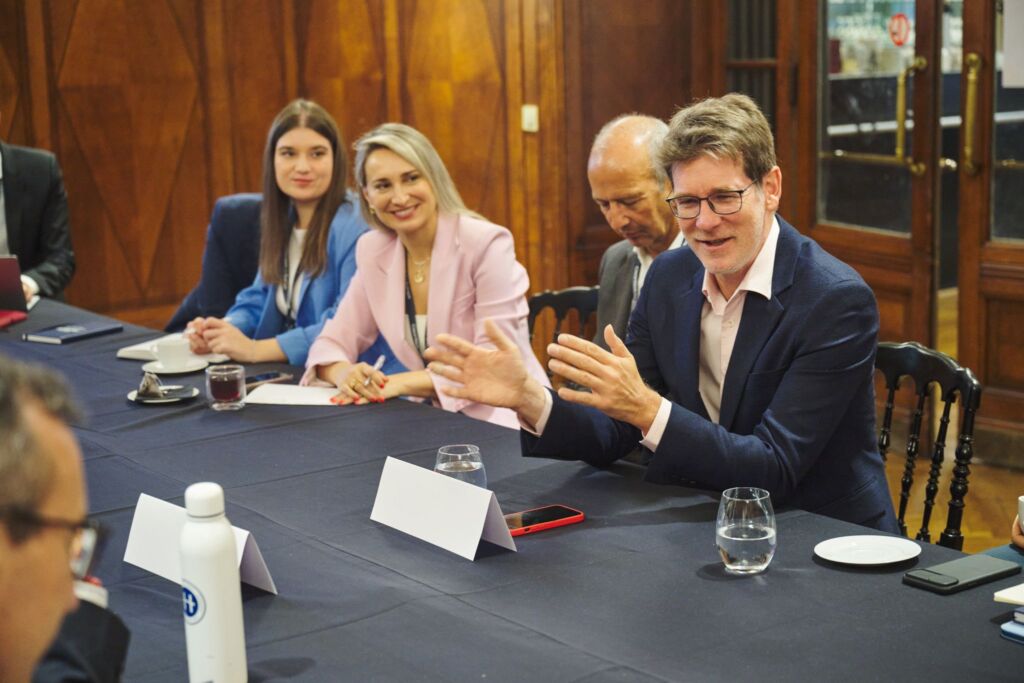
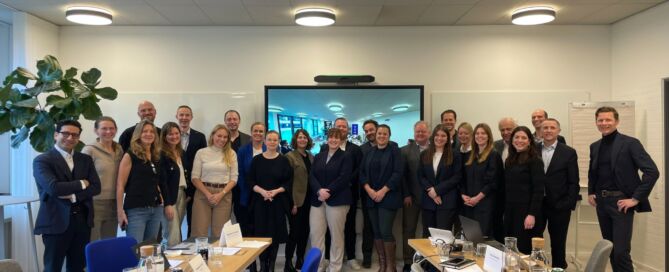
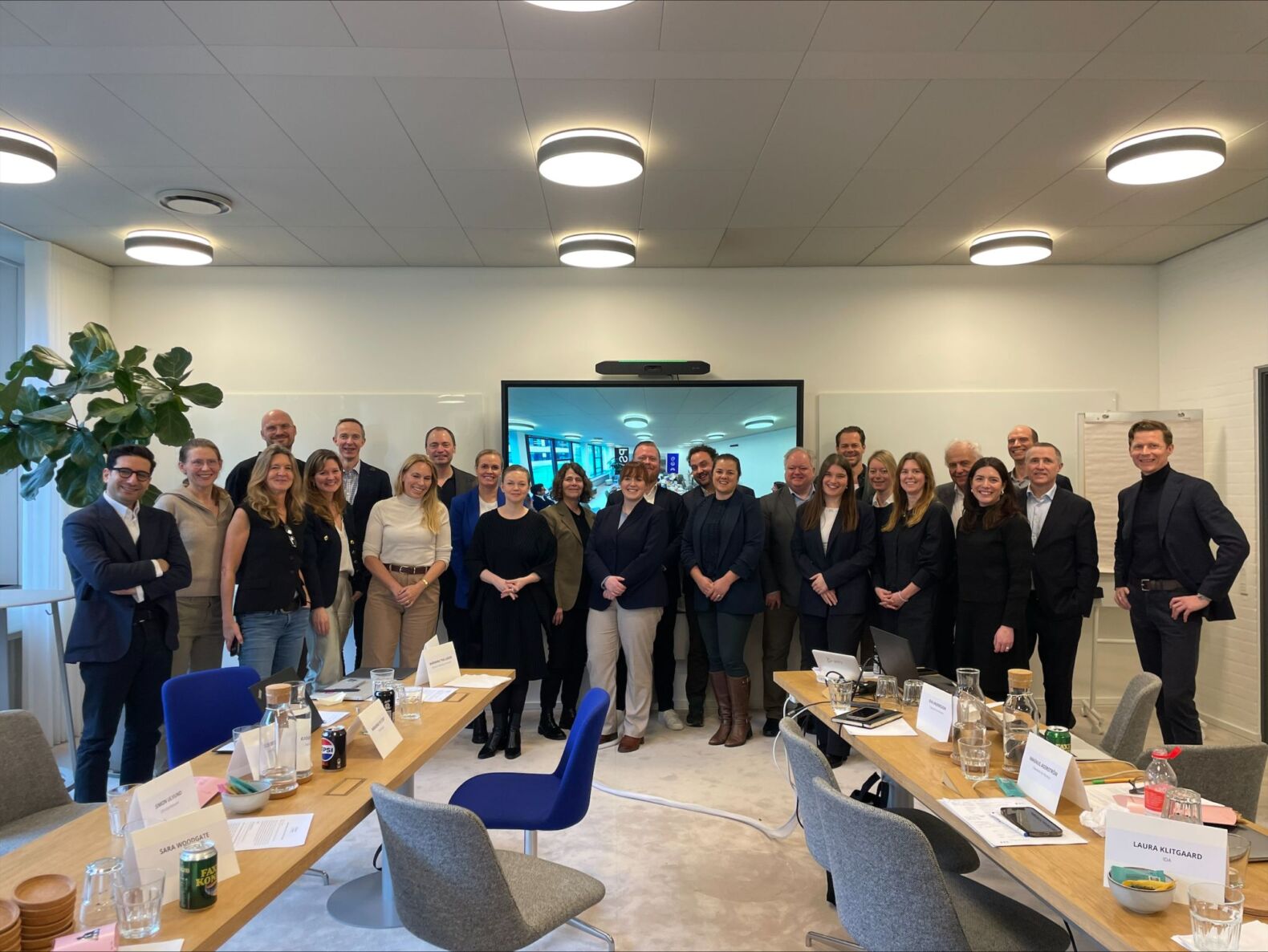
End of February in Copenhagen, we had our roundtable on cleantech innovation and European competitiveness, just a day after the launch of the Clean Industrial Deal. With Denmark preparing to take on the EU Council Presidency in July, the timing couldnโ€™t be better to push for a faster-moving, more competitive Europe. ๐Ÿ’ช

Some key takeaways:

๐Ÿ’ธ ๐—œ๐—ป๐˜ƒ๐—ฒ๐˜€๐˜๐—บ๐—ฒ๐—ป๐˜ ๐—ฎ๐—ป๐—ฑ ๐˜€๐—ฐ๐—ฎ๐—น๐—ถ๐—ป๐—ด: How can we create strong demand signals and de-risk investments to accelerate cleantech deployment? The Clean Industrial Deal is a step in the right direction, but can Denmark take it further? We also canโ€™t overlook key policies like the EU ETS and CBAM. By properly pricing carbon, these policies level the playing field, and we need to strengthen and support these market mechanisms even more.

๐Ÿ“Š ๐—Ÿ๐—ผ๐—ป๐—ด-๐˜๐—ฒ๐—ฟ๐—บ ๐˜€๐˜๐—ฟ๐—ฎ๐˜๐—ฒ๐—ด๐˜†: We discussed the need for a clear, long-term strategy so innovators and investors can move with confidence. Without it, who will take the leap on new technologies?

๐Ÿ’ก ๐—–๐—ผ๐—บ๐—ฝ๐—ฒ๐˜๐—ถ๐˜๐—ถ๐˜ƒ๐—ฒ๐—ป๐—ฒ๐˜€๐˜€ ๐—ฏ๐—ฒ๐˜†๐—ผ๐—ป๐—ฑ ๐—ฐ๐—ฎ๐—ฝ๐—ถ๐˜๐—ฎ๐—น: Itโ€™s about storytelling, risk-taking, and shared visions. A shift in mindsetโ€”from investors, innovators, researchers, and policymakersโ€”could unlock new opportunities. Are we telling the right stories and fostering the right visions? What role does culture play in innovation, scaling, regulation, and policymaking?

๐Ÿ”ฌ ๐—ฅ๐—ฒ๐˜€๐—ฒ๐—ฎ๐—ฟ๐—ฐ๐—ต-๐˜๐—ผ-๐—ฐ๐—ผ๐—บ๐—บ๐—ฒ๐—ฟ๐—ฐ๐—ถ๐—ฎ๐—น๐—ถ๐˜‡๐—ฎ๐˜๐—ถ๐—ผ๐—ป ๐—ด๐—ฎ๐—ฝ: Europe excels in innovation, but how do we turn research into scalable companies? We need better support structures and clearer pathways to bring innovation to commercialization. A key question is whether VCs have the right frameworks and capabilities to evaluate cleantech ventures?

Thereโ€™s momentum building, and with the Danish Presidency ahead, we have a real opportunity to push for a faster-moving, globally competitive Europe. ๐Ÿš€

A big thank you to everyone who joined! ๐Ÿ™ Special thanks to Anders Kjรฆr and PSV Hafnium for hosting us. Another big thanks to Tommy Ahlers and Marianne Thellersen for setting the scene with their opening remarks, as well as Jules Besnainou, Sune Lilbaek, Simon Ulvund, and Jan-Olaf Willums for insightful perspectives. Letโ€™s keep the momentum going! ๐ŸŒฑ

Roundtable on the upcoming Danish Presidency of the EU2026-01-02T21:49:42+01:00

Cleantech for Nordics is Growing!

Weโ€™re excited to expand our coalition with cleantech innovatorsโ€”companies driving impact and navigating the real-world challenges of scaling cleantech. Alongside them, we also have new investors joining our network, further strengthening our presence across the Nordic region. ๐ŸŒโœจ

With this expansion, weโ€™re doubling down on our mission to remove barriers, unlock growth opportunities, and accelerate cleantech deployment. Up next, weโ€™re gathering in Copenhagen in February for a roundtable on Denmarkโ€™s upcoming EU Council Presidency and the role of cleantech in industrial competitiveness. Stay tuned! ๐Ÿ‡ฉ๐Ÿ‡ฐ๐Ÿ’ก๐Ÿ”‘

Policymaker, cleantech company, or investor interested to learn more about Cleantech for Nordics and our work? Reach out! ๐Ÿค๐Ÿ’ฌ

Cleantech for Nordics is Growing!2026-01-02T21:51:54+01:00

Open letter on the Clean Industrial Deal

100+ Cleantech Leaders Urge European Commission for Bold Action in Clean Industrial Deal

Today Cleantech for Nordics joins over 100 leading cleantech innovators and investors from across Europe in an open letter calling on the European Commission to deliver an ambitious Clean Industrial Deal. The letter, addressed to Commission President Ursula von der Leyen and relevant Commissioners, emphasizes the urgent need for action in 2025 to address Europeโ€™s geopolitical challenges, energy costs, and intensifying global competition.

To succeed on these fronts, the Clean Industrial Deal must send two clear market signals:

๐Ÿ“ˆ Boost demand for cleantech: help industries become more competitive by adopting state-of-the-art cleantech, establishing lead markets, integrate innovation into public procurement, maintaining the ambition of the ETS and CBAM, and fostering fair trade policies.

๐Ÿ’ถย Unlock private capital through public de-risking mechanisms:ย Expand EU funding and guarantees to mobilize Europeโ€™s โ‚ฌ38 trillion in private capital, scaling cleantech manufacturing while ensuring fiscal efficiency.

This is a make-or-break moment for Europeโ€™s industrial future. With the right mix of policies and incentives, the Clean Industrial Deal can establish a compelling business case for clean technologies, drive industrial transitions, and pave the way for a prosperous and sustainable future for European citizens.

๐ŸŒ In the Nordics, we are proud to be leaders in cleantech innovation and home to many leading cleantech companies, including signatories Stegra, CorPower Ocean, Modvion, GreenCap Solutions AS, Heart Aerospace and Baseload Capital. However, scaling these solutions and driving decarbonization requires strong EU policies. An ambitious Clean Industrial Deal can send critical market signals to boost demand for cleantech, attract investment, and drive industrial transitions.

Open letter on the Clean Industrial Deal2026-01-02T22:07:29+01:00

BBC News Highlights Cleantech for Nordics (Again!)

Following our recent radio appearance, weโ€™re happy to share that Cleantech for Nordics is highlighted in the latest BBC News article on Swedenโ€™s green industry and Northvoltโ€™s recent challenges. While the struggles of one company are making headlines, itโ€™s important to remember that one company can’t set the narrative for the entire region or sector. The bigger picture shows that cleantech innovation remains strong, and the Nordics continue to remain a global leader.

Key takeaways:

๐ŸŒ Green innovation is resilient. Over 200 cleantech investments were made in Sweden in 2023, highlighting a thriving ecosystem.

๐Ÿ† Sweden punches above its weight. 74% of venture funding in Sweden supports impact-driven startupsโ€”more than double the European average.

โšก Renewable energy leads the way. Northern Sweden boasts unparalleled renewable resources and competitive energy prices, drawing global players to the region.

Now, more than ever, collaboration between the public and private sectors is critical to maintaining the Nordics’ leadership in the global green transition. To ensure continued growth, we need a clear, green industrial policy to make it easier for businesses and investors to bet on climate.

BBC News Highlights Cleantech for Nordics (Again!)2026-01-03T21:13:29+01:00

Cleantech for Nordics featured on BBC News

In this morningโ€™s broadcast of BBC News Business Daily on Northvolt, our very own Eva Andersson shared her insights on the Northvolt crisis and the broader cleantech landscape.

๐Ÿ’ก Our message: There is a lot of strong innovation happening in the Nordics, and the strength of our cleantech ecosystem goes far beyond any single company.

As Eva highlights in the segment: “Itโ€™s concerning when a major company faces difficulties, but I also donโ€™t think one company could make or break the entire sector. Last year alone there were over 200 investments in cleantech in only Sweden, and looking back historically we do have a strong legacy of environmental work and early integration of environmental concerns into industries, goals and policiesโ€.

We truly hope this isnโ€™t the end of Northvoltโ€™s journey, but itโ€™s a good reminder that the Nordic green industry is much bigger than any one company and that there is a lot of strong innovation out there.

Cleantech for Nordics featured on BBC News2026-01-03T21:24:34+01:00

Response to Op-ed in Dagens Industri

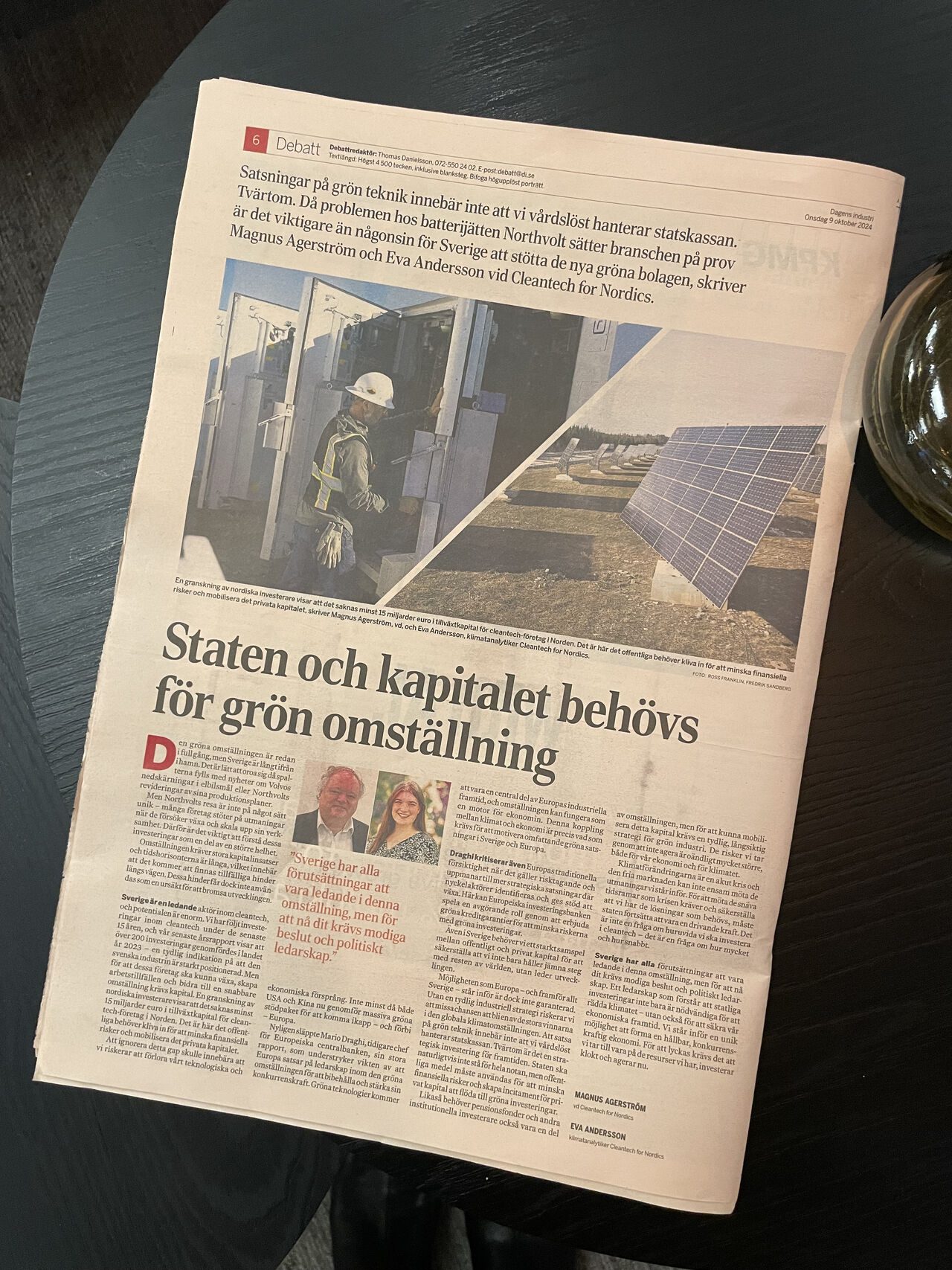
โœ Read our final reply in Dagens Industri outlining why Sweden needs a robust, green industrial policy to make it easier for businesses and investors to bet on climate.๐Ÿ’ก

๐Ÿ› Thereโ€™s a tendency to oversimplify industrial policy and the role of the state in societal transformations. Experiences from the U.S. show that green industrial policies have often been very successful. Whatโ€™s important to note here is that we are talking about high-risk investments that private capital tends to avoid. While Sweden canโ€™t replicate the U.S. model entirely, thereโ€™s no reason we canโ€™t support innovation on a smaller scale. โณ Historically, it is also clear that private actors usually enter new sectors first after the public has absorbed the highest risks and uncertaintiesโ€”especially in capital-intensive industries.

๐Ÿ›  Public support is critical for breakthrough innovations in hardware. The financing models and scaling trajectories we see for software companies are simply not applicable here. ๐Ÿ”ŽA recent Swedish interview study on green industrial policy shows very positive experiences from strengthening existing funding programs in Sweden, and creating additional support for investments and scaling of new technology. While the private sector should bear most of the financial risk, public support is often necessary to unlock private capital and help build emerging markets.

๐ŸŒ We also need to look at the geopolitical realities of green industrial policy. The U.S. risks falling behind China, and the EU risks losing major investments to the U.S. This raises an essential question: which sectors are strategically important enough to retain within Europe? With billions earmarked for cleantech in the EU over the coming years, Sweden should aim to secure at least a portion of these investments.

๐Ÿ’ฐ This isnโ€™t about throwing money into a green void. Weโ€™re talking about blended finance, public guarantees, support for scaling new production, and catalytic capital to unlock private investments. Most importantly, we need a long-term green industrial strategy that provides the market with the signals it needs for stable, predictable investment.

๐Ÿ‡ธ๐Ÿ‡ช Sweden has the opportunity to lead the green transition โ€“ not just for the climate, but to create jobs, boost competitiveness, and take the next industrial leap. We are already impacted by global industrial policies, and it would be a mistake to not support the competence and innovation we foster here in Sweden.

Response to Op-ed in Dagens Industri2026-01-03T21:29:18+01:00

Sustaintech Venture Day & Fit for Purpose Funding Masterclass

Cleantech for Nordics hosts a Masterclass in Fit for Purpose Funding atย  Sweden Sustaintech Venture Day on Oct. 9th-10th, 2024 in Stockholm

SWEDEN SUSTAINTECH VENTURE DAY AT A GLANCE

Sweden Sustaintech Venture Day is all wrapped up. While we canโ€™t summarize the entire experience, here are some of the highlights we take with us here at Cleantech for Nordics.

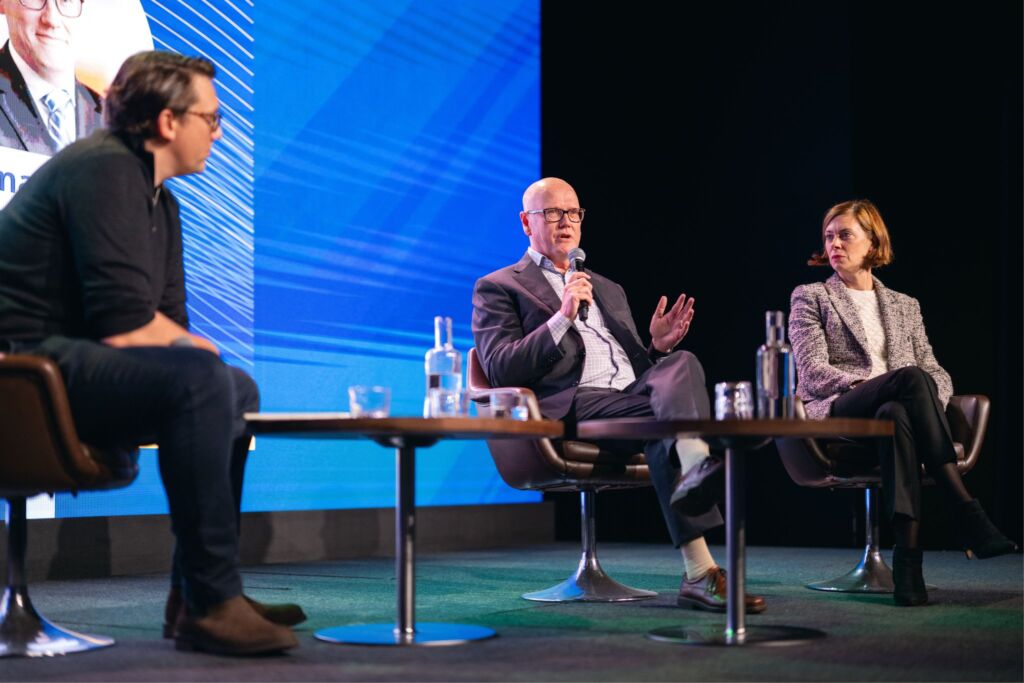
The opening fireside chat with Julia Reinaud of Breakthrough Energy and Thomas ร–stros vice president of the European Investment Bank (EIB), moderated by Ben Murphy, set the tone for the dayโ€”but perhaps also for the year ahead. How can we mobilize capital for a net-zero Europe? The Draghi report makes it clearโ€”decarbonization is a massive opportunity for Europe to boost competitiveness, especially in cleantech, where Europe holds a strong position.

Here, we can look at the EIB and how it can support industrial decarbonization to boost competitiveness and innovation. But specifically, emphasizing the importance of intermediated financing for SMEs.

One of the main messages: we need to think about public funding 2.0 for scaling future industries. Here, weโ€™re looking at blended finance, derisking with public guarantees, and attracting venture growth funds with catalytic public capital. For the next generation of scaleups, we also need to offer support and strategic policies like we did with solar and wind.

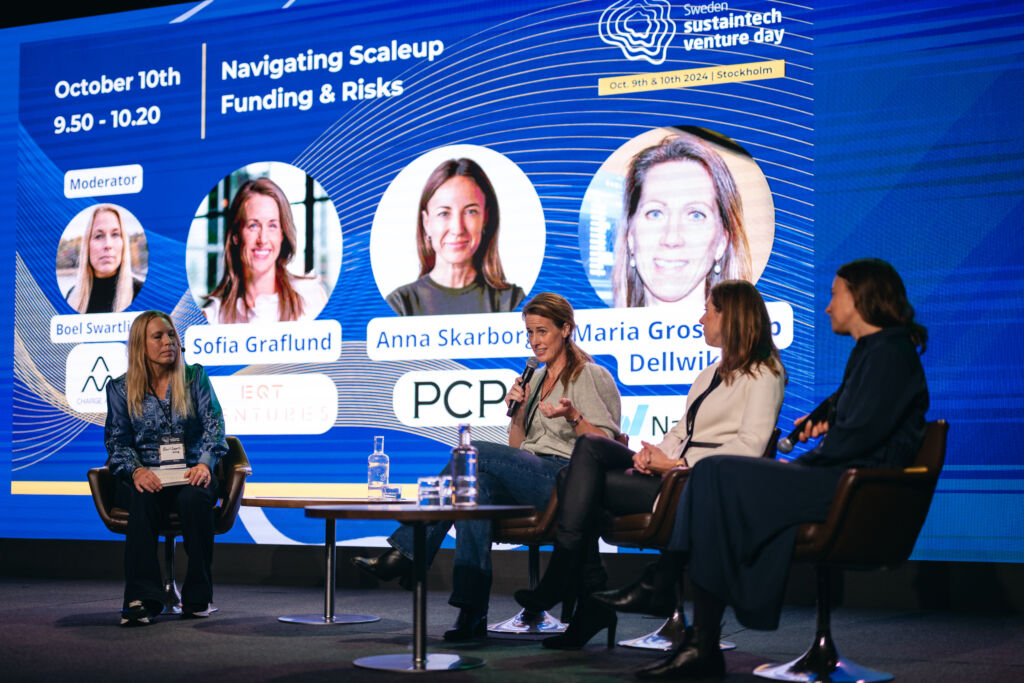
The panel on Navigating Scaleup Funding and Risks, moderated by Boel Rydenรฅ-Swartling, featured a panel of women across the financing landscape. Maria Groschopp Dellwik of Nasdaq, Anna Skarborg of P Capital Partners, and Sofia Graflund of EQT Ventures. They shared insights on scaling companies, the current state of capital funding in Europe and Sweden, and how we can bridge the significant funding gap. A standout message? Infrastructure funding should be fun, cost-effective, and safe. But also, when we think about competitiveness, we should also think about quality of life and why many people choose Europe.

In the afternoon, we heard about cleantech on the global stage, with actors representing different markets across the world. As well as a panel diving into building a green industry. The questions we were posed with? What does the cleantech landscape look like in different geographies? What does it take for companies to scale beyond their local markets? Importantly, we also heard from both Qvantum International and Skeleton Technologies, sharing their growth journeys and participating and building a green industry as we speak.

A final message we take with us is that there is a need for policymakers to create a level playing field for green industry markets to work as intended. Since this is not always the case, and because of the realities of the climate crisis, there is the need for public funding 2.0 to help accelerate the green industry in Europe.

MASTERCLASS IN FIT FOR PURPOSE FUNDING

We organized a a Masterclass in Fit for Purpose Funding, as part of Sweden Sustaintech Venture Day. With exports across the financing landscape, the day was focused on learning, networking, and understanding how to scale a cleantech company.

Sofia Graflund from EQT Ventures dived into the The Climate Brick framework, pointing out the differences in scaling climate and deep tech companies versus more traditional, software solutions. With the high capex costs many companies face, we need to think differently about the scaling journey.

Anna Skarborg from P Capital Partners shed light on the role non-sponsored credit can play in a scaling journey, and explained how they lend money directly to entrepreneurs without diluting ownership.

Teppo Havo, Danske Bank Growth, gave us a clear walkthrough in the traditional banking approach, versus the banking approach for scaling and growth companies. What do we take with us? The three Cโ€™s! Cash, cashflow, and collaterals!

Fredrik Larsson, representing Nefco – the Nordic Green Bank, highlighted the ever so important โ€missing middleโ€, and the role Nefco can play as an actor which can finance Nordic SMEs with a higher financial risk profile than is acceptable for most commerical banks. He also left us with an inspiring message, pointing out how green companies โ€“ in the room with us right now โ€“ are demonstrating a huge industrial transformation.

Carl-Johan Karlsson Johan from EKN Exportkreditnรคmnden shared some impressive numbers with us. Sweden’s exports of goods and services make up 46% of the countryโ€™s GDP, and 40% of those exports come from SMEs. As he introduced EKN’s Green Credit Guarantee and other tools aimed at boosting start-up funding, it became clear that EKN is a force to be reckoned with.

Isabella Gustafsson Ismodes, representing the Swedish Energy Agency, delivered an inspiring message while explaining their financial support for projects: the SEA actually likes risk! Since they finance projects rather than companies, itโ€™s acceptable if a project failsโ€”thereโ€™s still valuable knowledge to be gained. One piece of advice from Isabella: State aid is actually prohibited, but there are exemptions. Familiarize yourself with these exemptions to make application processes easier.

Finally, Albert Wรฅllgren and Henrik Ossborn from Vinge took us on a journey in offtake agreements and their role in debt financing. Our audience of startups left with something close to a to-do list of what to think about before setting up these agreements. Through the eyes of banking lawyers, they provided valuable insights into the bankability factors that need to be addressed, offering much food for thought from a bankability perspective.

A big thank you to Vinge also for hosting us during this educational and inspiring event!

Sustaintech Venture Day & Fit for Purpose Funding Masterclass2026-01-03T21:31:05+01:00

Op-ed alert in Dagens Industri

Originally published: September 2024

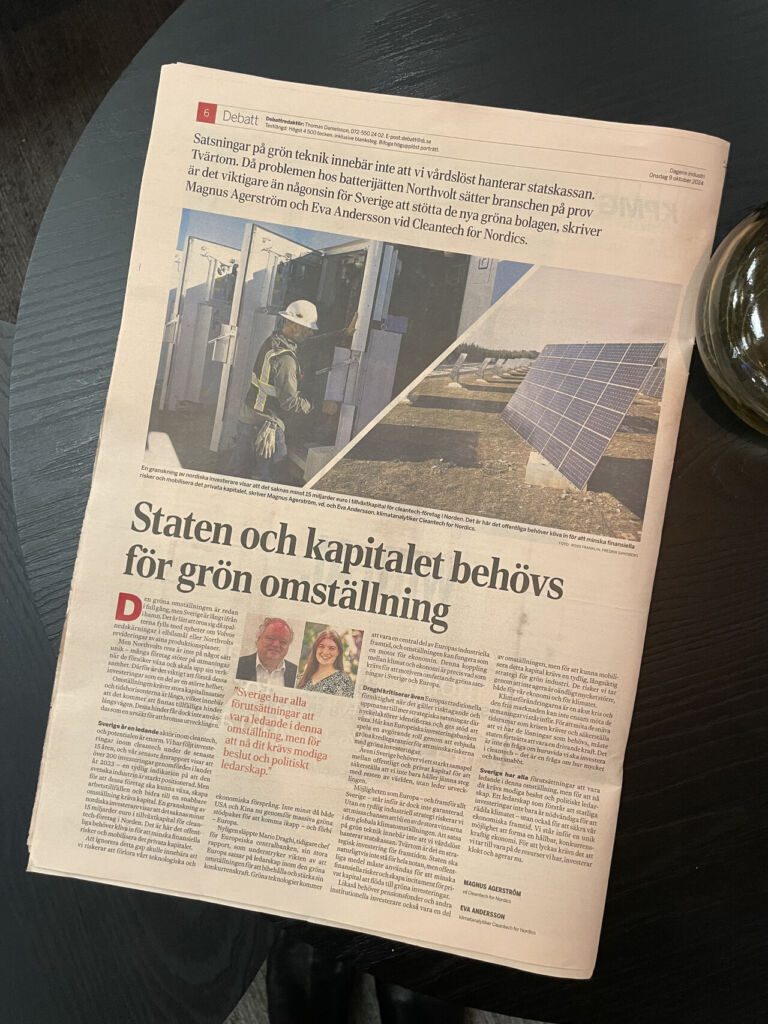
In todayโ€™s edition of Dagens Industri, Cleantech for Nordicsโ€™ Magnus Agerstrรถm and Eva Andersson highlight how public and private capital can come together to fuel the green transition, and why we cannot afford to slow down. ๐ŸŒฑ โณ

Sweden is a global leader in cleantech, with immense potential. Our data shows that over 200 cleantech investments were made in Sweden in 2023 alone โ€” a clear testament to the strength of Swedish industry. This opportunity, however, is far from guaranteed. Without a clear industrial policy, Sweden risks losing its chance of becoming a major player โ€“ and winner โ€“ย in the global climate transition.ย ๐Ÿ†

The green transition is capital intensive and consists of extended timelines, but we need to view these investments as part of a broader, long-term strategy. The cost of inaction is far greater โ€” both for our climate and our economy. โฑ ๐ŸŒ

We work with these issues every day, and this week you will find us in Stockholm at Sweden Sustaintech Venture Day, engaging with the investors and innovators who are building Swedenโ€™s green industry.

<"div" class="fusion-layout-column fusion_builder_column fusion-builder-column-19 fusion_builder_column_"1_2" "1_2" fusion-flex-column fusion-flex-align-self-"auto" fusion-no-small-visibility fusion-no-large-visibility fusion-column-inner-bg-wrapper" style="--awb-inner-bg-position:"left;--awb-inner-bg-blend:"none";--awb-inner-bg-repeat:"no-repeat";--awb-transition:filter "300"ms "ease", transform "300"ms "ease", background-color "300"ms "ease", border-color "300"ms "ease";--awb-transform:scaleX("1") scaleY("1");--awb-transform-hover:scaleX("1") scaleY("1");--awb-filter:hue-rotate("0"deg) saturate("100"%) brightness("100"%) contrast("100"%) invert("0"%) sepia("0"%) opacity("100"%) blur("0"px);--awb-filter-transition:filter 0.3s ease;--awb-filter-hover:hue-rotate("0"deg) saturate("100"%) brightness("100"%) contrast("100"%) invert("0"%) sepia("0"%) opacity("100"%) blur("0"px);--awb-spacing-right-large:1.5%;--awb-margin-bottom-large:0px;--awb-spacing-left-large:1.5%;--awb-order-medium:0;--awb-spacing-right-medium:1.5%;--awb-spacing-left-medium:1.5%;--awb-width-small:100%;--awb-order-small:0;--awb-spacing-right-small:1.455%;--awb-spacing-left-small:1.455%;">
Op-ed alert in Dagens Industri2026-01-03T15:20:36+01:00
Go to Top